I want to tell you about a Tuesday afternoon in my clinic.
The waiting room was full — eight patients, all eager to be seen. Seven were women. One was a man. And he was only there because his wife had driven him and essentially refused to leave until he walked through the door.
I've been practising medicine in Freeport for years, and I can tell you: that Tuesday was not unusual. Not even a little bit. Day after day, week after week, my patient census tells the same story — women come in. Men stay home. And when men do finally show up, they often come with problems that have been quietly growing for months, sometimes years.
So as we enter June and Men's Health Awareness Month, I find myself asking the question that has been sitting at the back of my mind for a long time: Why? And more importantly — what has to change?
What I See in My Own Clinic
Let me be clear about what I'm observing. This isn't a rigorous epidemiological study — it's pattern recognition built from years of clinical practice. But the pattern is unmistakable. When I look at who walks through my door for routine check-ups, chronic disease management, or even acute illnesses, the majority are women. Men, on the other hand, tend to present far later in their illness trajectory.
A man comes in with blood pressure that has been creeping up for three years — and he's only here because he fainted at work. Another arrives with a wound on his foot that he's been "watching" for two weeks. A third sits in my chair and tells me he hasn't had any blood work done in over a decade. He's 52 years old.
"The most common thing I hear from men in my clinic is some version of 'I thought it would go away on its own.' The second most common is 'My wife told me I had to come.'"
These are not isolated stories. They are a pattern. And that pattern has consequences — for individual health outcomes, for families, and for our community.
Is This Just a Bahamas Problem?
I wish I could say this was peculiar to Freeport or even to the Bahamas. It would be easier to fix if it were. But the evidence from around the world tells a different story.
Research consistently demonstrates that men are less likely than women to seek medical care across virtually every category: preventive care, mental health services, dental visits, and urgent care. A landmark analysis published in the Journal of Health and Social Behavior found that men are significantly less likely to visit a physician in any given year than women, even after controlling for differences in health status.
This pattern holds true across the Caribbean. Studies conducted in Jamaica, Trinidad, and Barbados have documented similar gender disparities in health-service utilisation. A study in the West Indian Medical Journal examining primary care attendance in the Eastern Caribbean found that women consistently outnumbered men in seeking outpatient services, particularly for preventive and chronic disease care.
And globally, the World Health Organization has long recognised that men have poorer health outcomes than women for most of the major causes of morbidity and mortality — not because men are inherently biologically weaker, but largely because of the way men engage (or don't engage) with the healthcare system.
A global pattern The gender gap in health-seeking behaviour is documented across high-income, middle-income, and low-income countries alike. It is not unique to any culture, religion, or economic setting — suggesting that the root causes are deeply embedded in how masculinity and health are socially constructed.
So Why Don't Men Come In?
This is the question I find most fascinating — and most important. Because understanding why is the first step toward changing anything.
1. Masculinity and the "Tough It Out" Culture
Ask most men why they don't go to the doctor and you'll hear some version of the same answer: "I'm fine." Or: "I don't like making a fuss." Or, my personal favourite: "It's nothing."
This isn't just stubbornness. It's the product of deeply ingrained cultural norms about what it means to be a man. In many societies — including our own here in the Bahamas — masculinity has historically been tied to toughness, self-reliance, and the suppression of vulnerability. Seeking help, including medical help, can feel like an admission of weakness. Research published in the American Journal of Public Health has described this as "masculine health behaviour" — a pattern in which men downplay symptoms, delay help-seeking, and resist acknowledging physical or emotional distress as a way of maintaining a masculine identity.
These norms are absorbed early. Boys are told not to cry. Young men are praised for playing through injuries. The message, repeated across a lifetime, is that real men push through.
2. Fear — of the Diagnosis, Not the Disease
Here's something I've noticed clinically: many men who avoid the doctor are not unintelligent or uninformed. They know something might be wrong. And that knowledge is precisely what keeps them away.
There is a particular kind of fear that goes: "If I don't go, they can't tell me anything bad." It is irrational, of course — the disease progresses whether or not it is named. But it is very human. And it is disproportionately a male pattern. Women tend to face the fear and go anyway. Men, on average, are more likely to use avoidance as a coping strategy.
3. Practical Barriers
It would be unfair to reduce everything to psychology. There are real practical barriers too. Men in the Bahamas, as elsewhere, are often the primary earners in their households. Taking time off work to see a doctor — particularly if that means lost wages — is a real sacrifice. Clinic hours that run nine to five make it genuinely difficult for men who work those same hours to attend. This is a systemic issue that the healthcare system itself needs to address.
4. A Healthcare System That Wasn't Fully Designed for Them
This one might surprise you, but it's worth saying: parts of the primary care system were built with women in mind. Cervical smears, antenatal care, family planning — these are services that bring women into clinics regularly from a young age, establishing a relationship with primary care that becomes a habit. Men don't have equivalent "mandatory" touchpoints early in life. There's no male equivalent of the antenatal visit that normalises seeing a doctor as something routine rather than reactive.
Late presentation = worse outcomes When men finally do seek care for conditions like hypertension, diabetes, prostate disease, or colorectal cancer, they often present at a more advanced stage. This directly translates into harder-to-treat disease, higher complication rates, and shorter survival — all of which are largely preventable.
Do Women Really Have Better Health-Seeking Behaviour?
The short answer is: yes, the data consistently shows that women seek healthcare more proactively than men. But I want to be careful not to frame this as simply "women are smarter about their health." The reasons are complex.
Women engage with healthcare more frequently in part because the system requires it — reproductive health, contraception, and pregnancy bring women into contact with the medical system from adolescence onwards. This contact normalises help-seeking. It builds trust with healthcare providers. It makes the clinic a familiar place rather than an intimidating one.
Women also tend to have larger social networks that discuss health openly, and research suggests they are more likely to be influenced by social norms that encourage seeking help. In many Caribbean communities, women are also the primary health decision-makers for their families — they're the ones who notice when something is wrong with a husband, child, or parent and take action.
None of this makes women inherently "better." It means that the same social and cultural forces that encourage men toward stoicism encourage women toward connection and help-seeking. It's a sociological phenomenon, not a biological one.
Men's Health Month: What Needs to Change?
So here we are, June 2026, Men's Health Awareness Month. Blue ribbons. Blue landmarks. Social media campaigns. All of it valuable, all of it insufficient if it doesn't translate into behaviour change. So let me be direct about what I think actually needs to happen.
For Individual Men: Start Small, Start Now
You don't have to overhaul your relationship with healthcare overnight. But I want every man reading this to take one concrete step this month. Book that check-up you've been putting off. Get that blood pressure measured. Have that blood sugar tested. It takes 20 minutes and it could save your life.
If fear is the barrier — fear of what they might find — I want you to hear this from a doctor: knowing is always better than not knowing. I have never once had a patient say to me, "I wish I'd waited longer to find out." Every single patient, without exception, has been grateful that we caught it when we did.
For Families and Communities: Stop Praising the Stoicism
If the man in your life is avoiding the doctor, please stop accepting "I'm fine" as an answer. The research is clear that men respond to social influence — particularly from partners, children, and close friends. You have more power than you think. The wife who drove her husband to my clinic that Tuesday afternoon may well have added years to his life.
For Healthcare Providers: Meet Men Where They Are
We need to think seriously about how we structure services to make them more accessible to men. Evening clinics. Workplace health screenings. Male-specific health promotion materials. Training providers to communicate in ways that don't feel patronising or infantilising to male patients. The evidence supports all of these approaches.
For Policymakers: Invest in Men's Health Infrastructure
The Bahamas, like much of the Caribbean, needs a systematic approach to men's health — not just an awareness month. That means tracking gender-disaggregated health utilisation data, funding targeted outreach programmes, and integrating men's health into national chronic disease strategies.
What a healthy man looks like in the data: Men who attend regular preventive care visits are significantly less likely to be hospitalised for preventable conditions, less likely to die prematurely from cardiovascular disease, and more likely to catch cancers — including prostate, colorectal, and skin cancers — at a treatable stage.
A Personal Word
I became a doctor because I want to keep people well — and to help them recover when they're not. But I can only do my job when patients come through my door. The most sophisticated medicines, the most advanced diagnostics, the best clinical guidelines in the world are useless if the person who needs them never shows up.
Men of the Bahamas — I am writing this for you. You are not invincible. Your health matters — to you, to the people who love you, and to this community. The bravest thing you can do this June is not to push through the pain and pretend everything is fine. The bravest thing you can do is book the appointment.
I'll be here. My door is open. Come in.
About the Contributor
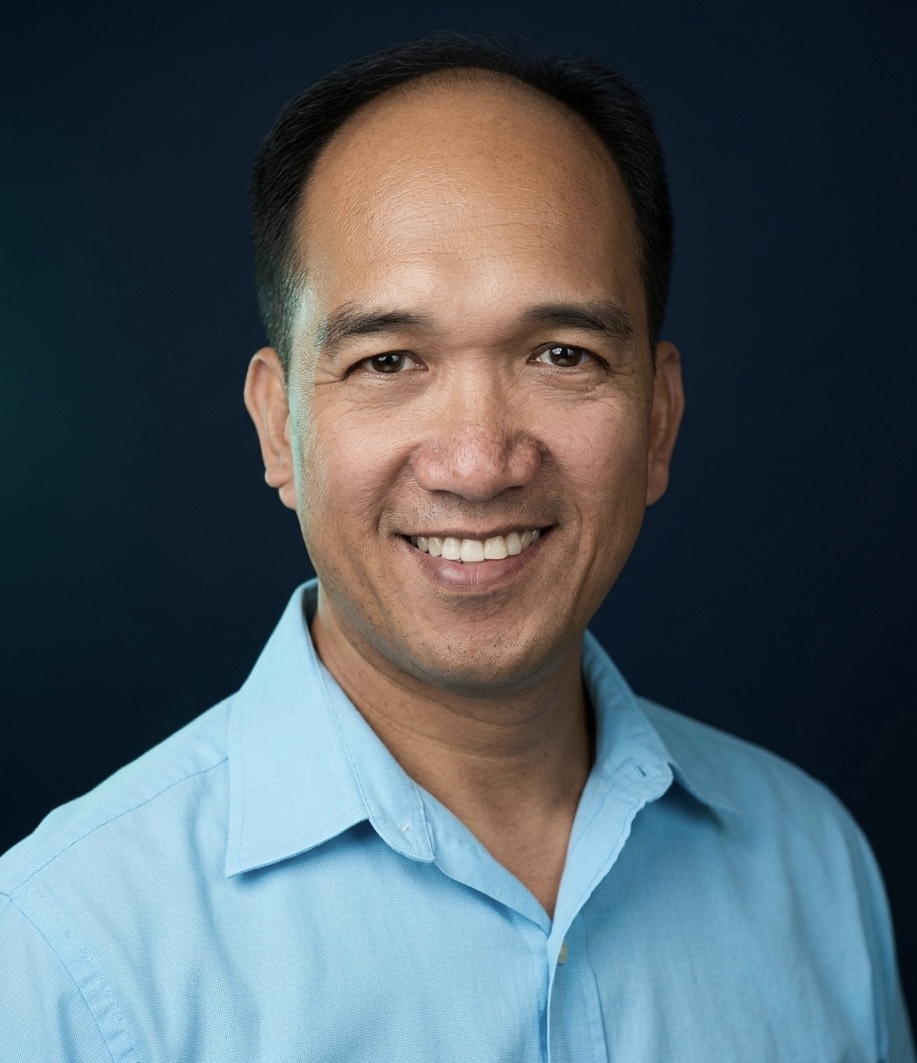
Dr. Dennis Quijano
Dr. Dennis Quijano is a Family Medicine physician with more than 20 years of clinical experience. He has been serving Grand Bahama for the more than 10 years. His advocacy is accessible health technology for all.